
Search engines are often the first place people go when they need information, want to compare products, or are looking for a service. If you own a website, appearing in relevant search results can help you reach these people without paying for every click.
This is where SEO, or Search Engine Optimization, comes in. SEO helps improve a website’s visibility in organic search results, making it easier for potential customers to discover your content, products, or services.
But what is SEO, and how does it actually work? In this guide, you will learn the fundamentals of SEO, how search engines discover and rank web pages, the main types of SEO, and practical ways to improve your website’s organic visibility.
What Is SEO?
SEO stands for Search Engine Optimization. It is the process of improving a website’s content, technical structure, usability, and authority to increase its visibility in unpaid search engine results.
For example, imagine you run a digital marketing agency and publish a page about local SEO services. When someone searches for “local SEO services for small businesses,” you want your page to appear among the relevant organic results.
SEO helps search engines understand your page and determine whether it provides a useful answer to that search.
Unlike paid advertising, organic SEO does not require you to pay for each click generated by a search result. However, SEO still requires an investment of time, expertise, tools, and sometimes professional services.
To understand the bigger picture, it also helps to learn what SEO means in marketing, particularly how organic search fits into a company’s overall marketing strategy.
How Does SEO Work?
SEO works by helping search engines discover your pages, understand their content, and evaluate how useful they are for particular searches.
Google uses automated systems and ranking algorithms to organize information from billions of web pages. Although the exact systems are complex and constantly evolving, the process can be understood through three main stages.
1. Crawling: Discovering Web Pages
Crawling is the process through which search engines use automated programs, commonly called crawlers or bots, to discover web pages and retrieve their content.
Search engines can discover pages through links from other pages, XML sitemaps, and previously known URLs.
For example, if you publish a new blog post and link to it from an existing article, a search engine may discover the new URL by following that link.
However, discovery is not guaranteed. Pages blocked by technical settings, inaccessible websites, or broken links may be difficult for search engines to crawl.
To help search engines discover your content:
- Create and maintain an XML sitemap.
- Use clear internal links between related pages.
- Avoid unnecessary redirect chains and broken links.
- Make sure important pages can be accessed by search engine crawlers.
- Check your website for accidental crawling restrictions.
2. Indexing: Understanding and Storing Content
After discovering a page, a search engine may process its content and decide whether to include it in its index.
Indexing allows search engines to store and retrieve information about pages when users perform relevant searches.
During this process, search engines may analyze text, page titles, images, links, and other available signals to understand the page.
Not every crawled page gets indexed. Duplicate content, poor accessibility, technical issues, or other factors may prevent a page from appearing in the index.
You can use Google Search Console to inspect individual URLs and check whether Google has indexed important pages.
3. Ranking: Selecting Relevant Search Results
When someone searches for a query, a search engine evaluates available information and presents results it considers relevant and useful.
This process is called ranking.
For example, if a person searches for “how to improve website SEO,” Google may show beginner guides, detailed tutorials, videos, and other useful resources.
Ranking depends on multiple systems and signals, including:
- Relevance: How closely the page matches the search query.
- Content quality: Whether the content is helpful, accurate, and sufficiently informative.
- Page usability: Whether visitors can access and use the page effectively.
- Links and reputation: Whether relevant links and other signals help establish the page’s credibility.
- Location and context: Whether the results should reflect the user’s location or other aspects of the search.
- Freshness: Whether up-to-date information matters for the particular query.
There is no single factor that guarantees a top position. Search engines evaluate many signals, and their importance varies depending on the search.
You can monitor the appearance of your website in search results by learning what SERP means in SEO.
What Are the Main Types of SEO?
SEO involves several connected activities. Most strategies include on-page SEO, technical SEO, off-page SEO, and, when relevant, local SEO.
1. On-Page SEO
On-page SEO focuses on improving individual web pages so search engines and visitors can understand their purpose.
Common activities include:
- Researching relevant keywords and search intent.
- Writing descriptive page titles and meta descriptions.
- Organizing content with clear headings.
- Using relevant internal links.
- Improving readability and answering users’ questions.
- Optimizing images with descriptive alternative text where appropriate.
For example, an article targeting “best SEO tools for small businesses” should explain the tools, compare their features, and help readers choose an option rather than simply repeating the keyword.
2. Technical SEO
Technical SEO focuses on the technical elements that affect crawling, indexing, and website usability.
Important areas include:
- Website speed and page experience.
- Mobile usability.
- HTTPS security.
- XML sitemaps and crawlability.
- Canonical tags and duplicate URL management.
- Structured data implementation where appropriate.
- Redirects, broken links, and indexation problems.
A website can have excellent content but still struggle in search if important pages cannot be crawled or indexed correctly.
3. Off-Page SEO
Off-page SEO includes activities outside your website that can support its reputation, authority, and visibility.
Examples include earning relevant backlinks, digital PR, brand mentions, and building relationships with reputable websites in your industry.
The focus should be on earning genuine recognition rather than collecting as many links as possible. Buying or manipulating links to influence rankings can violate search engine spam policies.
4. Local SEO
Local SEO helps businesses improve visibility for geographically relevant searches.
For example, a plumber in London may want to appear for searches such as “emergency plumber near me” or “plumber in London.”
Local SEO activities can include optimizing a Google Business Profile, maintaining accurate business information, collecting genuine customer reviews, and building relevant local citations.
The right approach depends on whether your business serves a specific area, operates online, or serves customers across multiple regions.
Why Are Keywords Important in SEO?
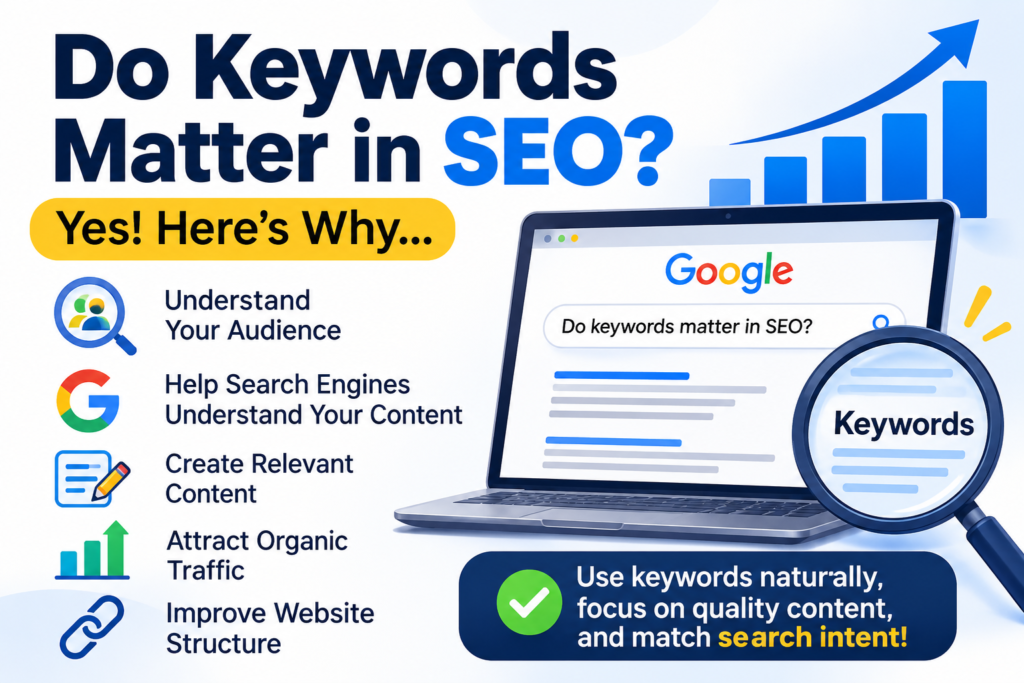
Keywords help you understand the language people use when searching for information, products, and services.
Suppose you operate an online store selling office furniture. Potential customers might search for “ergonomic office chair,” “office chairs for back support,” or “best chair for home office.”
These searches reveal different needs and expectations.
Effective keyword research helps you identify relevant queries, understand search intent, and decide which topics deserve their own pages.
However, SEO is not about repeating a keyword as many times as possible. Search engines can understand related language and context, so your content should answer the user’s question naturally.
Before optimizing a page, consider:
- What problem is the searcher trying to solve?
- Is the person looking for information, a product, or a service?
- What details would make the page more useful than a basic answer?
- Does the topic deserve a separate page or belong within existing content?
Choosing appropriate keywords and matching them to the right pages creates a stronger foundation for your SEO strategy.
What Are the Benefits of SEO?
SEO can support business growth in several ways when it attracts relevant visitors and provides a useful experience.
Increased Organic Visibility
Well-optimized pages may appear for searches related to your products, services, and expertise. This helps potential customers discover your website.
More Relevant Website Traffic
SEO can attract people who are actively researching a problem or looking for a solution. The quality of this traffic depends on how closely your content matches their needs.
Long-Term Marketing Value
A useful page can continue attracting organic visitors after publication. However, rankings and traffic are not permanent, and content may require updates as competitors, search behavior, and search systems change.
Better User Experience
Many SEO improvements also help visitors, including clearer navigation, useful content, mobile-friendly layouts, and working links.
More Opportunities to Generate Leads and Sales
For businesses, relevant organic traffic can lead to enquiries, purchases, bookings, and other conversions. Results depend on the audience, competition, website quality, and strength of the offer.
How to Improve SEO on Your Website
If you are new to SEO, you do not need to change everything at once. Start with the pages and problems that are most important to your business.
Step 1: Research Your Audience and Keywords
Identify the questions your audience asks and the terms they use when searching. Choose keywords that match your products, services, and expertise.
Step 2: Create Helpful, Relevant Content
Publish pages that satisfy the search intent behind your target queries. Explain concepts clearly, provide useful examples, and avoid adding unnecessary text just to increase word count.
Step 3: Optimize Page Titles and Headings
Write a clear, descriptive title for each important page. Organize the content with logical headings and use relevant terms naturally.
A descriptive SEO slug can also make a URL easier to understand, although changing URLs without a good reason can create unnecessary risks.
Step 4: Improve Technical Accessibility
Check whether search engines can crawl your pages, whether important URLs are indexed, and whether visitors can use your website comfortably on mobile devices.
Step 5: Build Relevant Internal and External Links
Link related pages together to help readers discover additional information and to help search engines understand how your content is connected.
Earn relevant backlinks by publishing useful resources and building legitimate relationships with websites in your industry.
Step 6: Measure Results and Improve
Use Google Search Console to monitor impressions, clicks, search queries, and indexing information. Use an analytics tool to understand visitor behavior and conversions.
Regularly review performance to identify pages that need better content, improved titles, technical fixes, or stronger internal links.
A structured SEO report can help you organize these findings and communicate progress to clients or stakeholders.
How Long Does SEO Take to Show Results?
SEO usually takes time because search engines need to discover, process, and evaluate pages, while websites compete against existing content and established competitors.
Some technical fixes can improve accessibility relatively quickly, but ranking improvements and meaningful business results may take several months or longer. The timeline depends on competition, website history, content quality, technical condition, and the resources invested.
Rather than expecting immediate rankings, set measurable goals such as improving relevant impressions, increasing organic clicks, attracting qualified leads, or growing sales from organic search.
You can also learn more about how long SEO takes to see results to set realistic expectations for your strategy.
Common SEO Mistakes to Avoid
Even a well-planned strategy can underperform when important basics are overlooked.
Avoid these common mistakes:
- Keyword stuffing: Repeating keywords unnaturally instead of providing useful information.
- Publishing thin content: Creating pages that do not answer the user’s question adequately.
- Ignoring technical issues: Leaving important pages blocked, broken, or inaccessible.
- Building manipulative backlinks: Pursuing artificial links instead of genuine editorial recognition.
- Neglecting internal links: Making useful content difficult for visitors and crawlers to discover.
- Expecting instant rankings: Treating SEO as a quick fix rather than an ongoing process.
- Tracking rankings alone: Ignoring organic traffic quality, leads, sales, and other business outcomes.
A balanced strategy combines useful content, technical accessibility, relevant links, and consistent measurement.
Conclusion
Understanding what SEO is and how it works is the first step toward building a successful organic search strategy. SEO helps search engines discover, understand, and evaluate your website so relevant pages can appear for appropriate searches.
Start by researching your audience, publishing helpful content, improving your website’s technical foundations, and connecting related pages through meaningful internal links. Then monitor performance and make improvements based on real data.
SEO is an ongoing process, not a one-time task. By focusing on relevance, usefulness, and a positive visitor experience, you can build a stronger foundation for long-term organic visibility.