
SEO stands for Search Engine Optimization. In marketing, SEO refers to the process of improving a website’s visibility in organic search results to attract relevant visitors, build brand awareness, and generate potential customers.
For example, imagine you own a digital marketing agency that offers SEO services. When someone searches for “SEO agency for small businesses,” you want your website to appear among the relevant search results. SEO helps you improve your chances of reaching people who are already looking for services like yours.
Unlike paid search advertising, SEO focuses on earning visibility in unpaid search results. It combines content optimization, keyword research, technical improvements, and website authority to help search engines understand your pages and connect them with relevant searches.
In this guide, you will learn what SEO means in marketing, how it works, why businesses invest in it, and how to use it as part of a broader digital marketing strategy.
What Is the Meaning of SEO in Marketing?
SEO in marketing means optimizing a website so that people can find its content, products, or services through relevant organic search results.
Search engines such as Google help users find answers, compare options, and discover businesses. SEO helps your website become more visible when people search for topics related to what you offer.
For example, a company selling accounting software might target searches such as:
- Best accounting software for small businesses
- How to manage business expenses
- Accounting software for freelancers
- How to prepare a profit and loss statement
Each search represents a different need. By creating helpful pages for relevant searches, the company can reach potential customers at different stages of their buying journey.
SEO is therefore more than adding keywords to website content. It is a marketing strategy that connects your business with people who are actively searching for information, products, and services.
If you are new to the subject, start with our guide to what SEO is and how it works for a foundational explanation of crawling, indexing, ranking, and the main types of SEO.
How Does SEO Work in Marketing?
SEO works by helping search engines discover your website, understand its content, and determine when its pages may be useful for a particular search.
From a marketing perspective, the process involves several connected activities.
1. Understanding Your Target Audience
Before optimizing a website, you need to understand who you want to reach and what they are searching for.
A local plumbing company, for example, may want to reach homeowners looking for emergency repairs. An online software company may target businesses comparing different tools.
Understanding your audience helps you choose relevant keywords, create useful content, and direct visitors toward the right products or services.
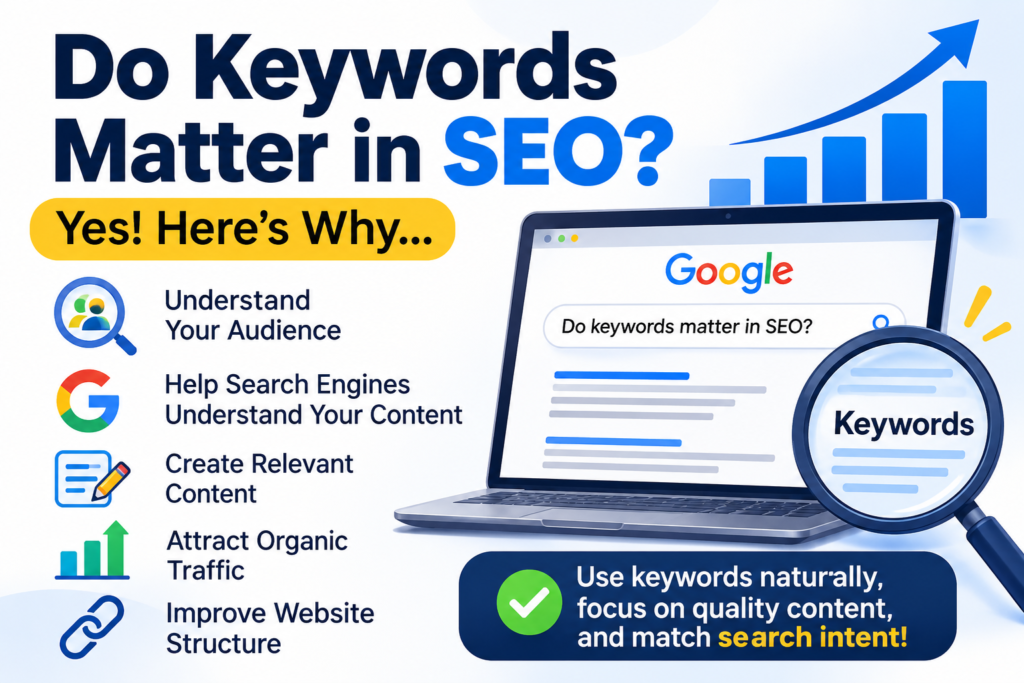
2. Conducting Keyword Research
Keyword research identifies the search terms people use when looking for information related to your business.
A marketing agency might target phrases such as “SEO services for startups” or “local SEO consultant.” These searches can indicate that someone is exploring or considering professional services.
The goal is not to target every possible keyword. Instead, choose relevant searches that match your expertise, audience, and business objectives.
3. Creating and Optimizing Content
Once you understand your audience’s needs, create pages that answer their questions or help them make decisions.
This may include blog posts, service pages, product descriptions, comparison articles, and detailed guides.
Use descriptive page titles, clear headings, relevant internal links, and natural keyword placement. Your content should satisfy the searcher’s intent rather than simply repeat a phrase.
4. Improving Technical SEO
Technical SEO helps search engines access and understand your website.
Important areas include crawlability, indexing, mobile usability, HTTPS security, page performance, and duplicate URL management.
Even excellent content may struggle to gain organic visibility if important pages cannot be accessed or indexed properly.
5. Measuring and Improving Results
SEO requires ongoing measurement. You can use Google Search Console to monitor search impressions, clicks, queries, and indexing issues. Analytics tools can help you evaluate engagement and conversions.
Reviewing this information allows marketers to identify which pages perform well and which need improvement.
Why Is SEO Important in Digital Marketing?
SEO supports several marketing goals, from increasing brand visibility to generating qualified leads.
1. It Helps Customers Discover Your Business
People frequently use search engines to research problems, compare products, and find service providers.
When your pages appear for relevant searches, potential customers have another way to discover your business without first knowing your brand name.
2. It Attracts Relevant Traffic
A well-targeted SEO strategy can bring visitors who are actively looking for information or solutions related to your products and services.
For example, someone searching for “best CRM software for real estate agents” may be more relevant to a CRM company than someone searching for a general definition of software.
Traffic quality matters more than visitor numbers alone. The objective is to attract people who are likely to benefit from what you offer.
3. It Can Support Lead Generation
SEO can help businesses generate enquiries, consultation requests, email subscriptions, and sales.
A service page optimized for a relevant commercial search can introduce visitors to your offering and encourage them to take the next step.
However, rankings alone do not guarantee leads. Your website also needs a clear value proposition, credible information, and a straightforward conversion process.
4. It Builds Brand Awareness
Appearing consistently for relevant searches can help people become familiar with your brand.
Even when a visitor does not click immediately, seeing your business in search results may help them recognize it during a later search or purchase decision.
5. It Creates Long-Term Marketing Opportunities
Useful content can attract organic visitors long after publication. Unlike an advertising campaign that generally stops generating paid exposure when spending ends, a successful organic page may continue receiving traffic.
However, SEO is not free to maintain. Content production, technical work, competition, and changing search behavior can all require ongoing investment.
What Are the Main Types of SEO Used in Marketing?
Businesses typically combine several SEO approaches depending on their goals and audience.
On-Page SEO
On-page SEO improves individual web pages through relevant content, descriptive titles, headings, internal links, and a clear structure.
For example, an online store may optimize a product category page to help customers find the right products and understand their features.
Technical SEO
Technical SEO focuses on website infrastructure and accessibility. It includes crawlability, indexation, mobile usability, redirects, and other technical elements.
This helps ensure that search engines can access and process the pages you want them to consider.
Off-Page SEO
Off-page SEO involves activities that help establish a website’s reputation outside its own pages. Earning relevant backlinks, digital PR, and legitimate industry mentions can support this goal.
The priority should be quality and relevance rather than acquiring links through manipulative schemes.
Local SEO
Local SEO helps businesses become more visible in searches connected to a particular geographic area.
Restaurants, law firms, dental practices, contractors, and other local businesses may benefit from accurate business information, an optimized Google Business Profile, and genuine customer reviews.
SEO vs. PPC: What Is the Difference?
SEO and pay-per-click advertising are both used to reach people through search engines, but they work differently.
| Factor | SEO | PPC Advertising |
| Search visibility | Earned organic placement | Paid advertising placement |
| Cost model | Ongoing investment in people, content, and tools | Usually involves paying for clicks or other ad interactions |
| Speed | Often takes months to build meaningful results | Can generate visibility shortly after a campaign launches |
| Longevity | Pages may continue attracting traffic over time | Paid exposure usually stops when the campaign ends |
| Main considerations | Content quality, technical health, relevance, and competition | Budget, targeting, bids, ad quality, and landing pages |
Neither approach is automatically better for every business.
SEO can be valuable for building long-term organic visibility, while PPC can help businesses reach targeted audiences quickly or test offers. Many companies use both to support different marketing objectives.
How to Build an Effective SEO Marketing Strategy
You do not need a complicated strategy to begin. Focus on the activities most closely connected to your business goals.
Step 1: Set Clear Marketing Goals
Decide what you want SEO to accomplish. Your goals might include increasing qualified organic traffic, generating leads, improving product discovery, or increasing online sales.
Step 2: Research Relevant Keywords
Identify the searches your target audience uses. Consider search intent, business relevance, competition, and whether you can create a useful page for the query.
Step 3: Optimize Important Pages
Start with your main service pages, product pages, and existing content that already attracts impressions. Improve titles, headings, content quality, internal links, and calls to action where appropriate.
Step 4: Publish Useful Content Consistently
Create articles that answer real questions your audience has. Link related articles together so readers can explore additional information without having to return to the search results.
Step 5: Fix Technical Problems
Review important pages for indexing issues, broken links, mobile usability problems, and other technical barriers.
Step 6: Track Performance
Monitor impressions, clicks, rankings, conversions, and the quality of traffic. Use the findings to decide where further improvements are likely to have the greatest impact.
For a more structured approach, see our guide to what an SEO report is, which explains how SEO performance can be organized and communicated.
How Is SEO Different From Other Marketing Channels?
SEO is one part of a broader digital marketing mix. Social media helps businesses build communities and distribute content, email marketing supports direct communication with subscribers, and paid advertising can generate targeted exposure.
SEO differs because it focuses on improving visibility when people search for relevant information or solutions.
These channels can work together. For example, a business can publish an informative article, distribute it through social media, share it with an email audience, and optimize it to attract organic search traffic over time.
The best combination depends on your audience, budget, sales cycle, and business objectives.
Conclusion
SEO in marketing means improving a website’s organic search visibility to help relevant audiences discover a business, explore its offerings, and take meaningful action.
It combines keyword research, helpful content, on-page optimization, technical SEO, relevant backlinks, and ongoing performance measurement. When these activities align with your audience’s needs, SEO can support brand awareness, qualified traffic, lead generation, and sales.
If you are starting from scratch, focus on understanding your customers, creating useful pages, and ensuring search engines can access your website. Then measure your progress and improve your strategy as you learn what works.
Understanding what SEO means in marketing is the first step toward making organic search a valuable part of your overall digital marketing plan.