
Introduction
One of the first questions business owners ask after investing in search engine optimization is: How long does SEO take to see results?
It is a fair question. You publish articles, improve website pages, fix technical problems, build backlinks, and optimize your website. Naturally, you want to know when these efforts will bring more visitors, higher rankings, and new customers.
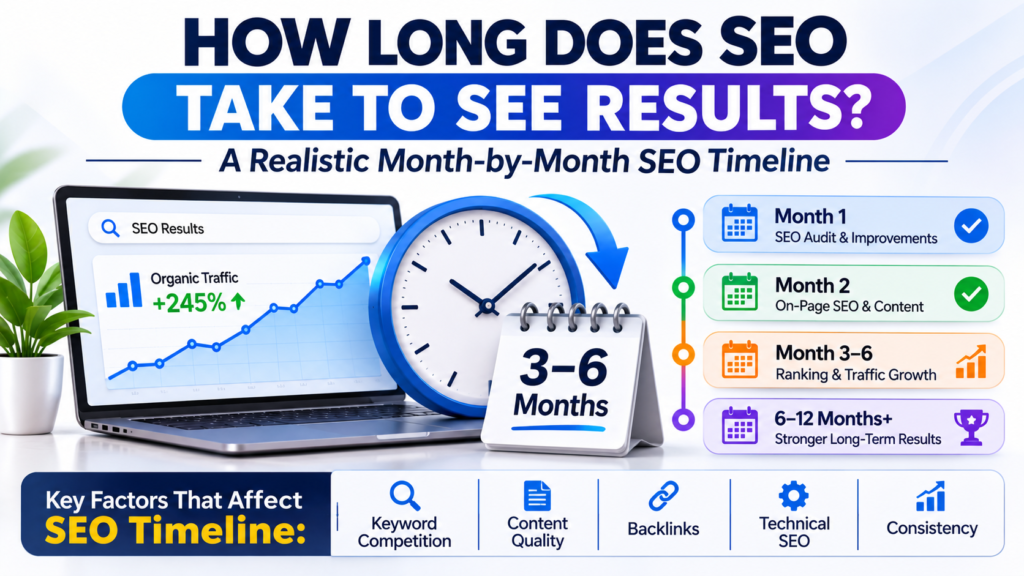
The honest answer is that SEO takes time. Many websites begin to see measurable progress within three to six months, while more significant results can take six to twelve months or longer. Highly competitive industries and brand-new websites may need even more time.
However, SEO does not follow one fixed schedule. Google explains that some website changes can take effect within hours, while others may take several months to influence search results.
In this guide, we will explain the SEO timeline, the factors that affect it, and how to measure progress before organic traffic starts growing.
How Long Does SEO Take to Show Results?
For many websites, a practical estimate is:
- 1–3 months: Technical improvements, indexing progress, and early search visibility.
- 3–6 months: More keyword impressions, ranking improvements, and possible increases in organic clicks.
- 6–12 months: More consistent traffic growth and opportunities to generate leads or sales.
- 12 months and beyond: Continued growth, stronger visibility, and results from accumulated SEO work.
These are planning estimates, not guaranteed milestones. Some websites see progress sooner, while others take longer because of competition, website problems, or limited resources.
Google’s own documentation says that website changes may take anywhere from a few hours to several months to appear in Search. It recommends allowing a few weeks before assessing whether a change has helped.
SEO Results Timeline: What Happens Month by Month?
Understanding each stage helps you set realistic expectations and avoid making unnecessary changes too quickly.
Month 1: SEO Audit and Website Improvements
The first month is usually about understanding your website and fixing its biggest problems.
An SEO professional or website owner may:
- Conduct a complete SEO audit.
- Check website indexing and crawling.
- Review robots.txt and XML sitemaps.
- Find broken links and redirect problems.
- Check website speed and mobile usability.
- Research relevant keywords.
- Analyze competitors.
- Review existing website content.
- Identify missing or duplicate title tags and meta descriptions.
At this stage, you may not notice a major increase in organic traffic. That does not mean the work is useless. The goal is to build a strong foundation.
For a better understanding of the basics, read our guide on what SEO is and how it works.
Month 2: On-Page SEO and Content Optimization
The second month often focuses on improving the pages that already exist and creating content around relevant search terms.
Common activities include:
- Improving page titles and headings.
- Writing useful meta descriptions.
- Updating thin or outdated content.
- Adding relevant internal links.
- Improving image alt text.
- Organizing content into topic clusters.
- Publishing new, useful articles.
- Matching pages with the correct search intent.
Keyword research is particularly important during this stage. Targeting the wrong keywords can waste months of effort.
If you are planning your content strategy, read how to find the right keywords for SEO.
You can also learn how many keywords you should use for SEO to understand how to target a primary keyword and related terms naturally.
Month 3: Early Ranking and Visibility Changes
By the third month, some websites may start noticing early signs of progress.
For example:
- More pages may appear in Google’s index.
- Existing pages may receive additional search impressions.
- Some long-tail keywords may begin ranking.
- Pages already appearing in search results may improve their positions.
- Organic clicks may start increasing.
Remember that indexing and ranking are different things. A page can be indexed by Google without ranking prominently or receiving visitors.
You can learn more about this process in our guide to what SERP means in SEO.
Months 4–6: Measurable SEO Growth
This is when consistent SEO work may begin to produce more noticeable results.
You might see:
- Improvements for targeted keywords.
- Growth in organic impressions and clicks.
- More pages receiving search traffic.
- Better visibility for relevant searches.
- More visitors reaching service or product pages.
- Early leads, enquiries, or sales from organic search.
However, results depend on the quality of your strategy and the competition in your industry. A website targeting highly competitive national keywords may need more time than a local business targeting specific service-and-location searches.
Months 6–12: Building Consistent Organic Traffic
After six months, a website with consistent, effective SEO work may start building stronger search visibility.
At this stage, the focus should move beyond publishing more pages. You should also improve existing content, identify new opportunities, strengthen relevant internal links, and analyze which pages bring valuable visitors.
A successful SEO strategy is ongoing. Rankings can change, competitors can improve their websites, and search algorithms continue to evolve.
After 12 Months: Long-Term SEO Growth
SEO does not automatically stop working after one year. In fact, long-term work can create opportunities for continued growth.
Your website may have:
- A larger collection of useful, indexed content.
- Stronger visibility for relevant keywords.
- More established topical coverage.
- A better internal linking structure.
- More relevant backlinks and brand recognition.
- A clearer understanding of which pages generate conversions.
You still need to maintain and improve your website. SEO is not a one-time activity.
What Factors Affect How Long SEO Takes?
Several factors influence how quickly a website can improve its search visibility.
1. Website Age and History
A new website usually has less established search visibility, fewer backlinks, and a smaller content library than an established website.
An older website may already have useful content, relevant links, and existing rankings. However, age alone does not guarantee good performance.
A new website can still grow when it provides valuable content and follows sound SEO practices.
2. Keyword Competition
Keyword difficulty has a major effect on your SEO timeline.
For example, ranking for a broad keyword such as “SEO services” may be much harder than ranking for a more specific phrase such as “SEO services for small dental clinics in Lahore.”
Competitive keywords often require stronger content, better website authority, and a more sustained SEO strategy.
3. Content Quality and Search Intent
Publishing many articles does not guarantee rankings.
Your content should answer the questions people are actually searching for. It should be useful, accurate, original, easy to understand, and better suited to the reader’s needs than a generic article.
For example, someone searching “how to fix a broken website link” wants practical instructions. A page that only explains what a broken link is may not fully satisfy that search.
4. Technical SEO
Technical problems can prevent search engines from discovering, crawling, or indexing important pages.
Common issues include:
- Pages blocked by robots.txt.
- Incorrect noindex tags.
- Broken internal links.
- Redirect chains.
- Duplicate URLs.
- Poor mobile usability.
- Slow page loading.
- Incorrect canonical tags.
- Sitemap errors.
Fixing serious technical problems can help search engines access your content more effectively. However, technical improvements alone do not guarantee higher rankings.
5. Backlink Profile and Website Authority
Relevant backlinks can help search engines discover pages and understand how content is connected across the web. Google’s ranking systems include link analysis, but not every backlink is valuable.
Focus on earning links from relevant, trustworthy websites rather than purchasing large quantities of low-quality links.
A natural backlink profile takes time to develop.
6. Internal Linking
Internal links connect related pages on your website. They help visitors discover useful information and help search engines understand your site’s structure.
For example, an article about keyword research can link to a guide about keyword selection, while an article about SERPs can link to a guide explaining SEO fundamentals.
A clear internal linking structure makes it easier to navigate your website and discover related content.
7. Consistency of SEO Work
SEO requires regular attention. Publishing useful content, updating existing pages, fixing technical issues, and monitoring performance can help build long-term progress.
Publishing 20 articles in one week and doing nothing for the next six months is not a reliable content strategy.
Consistency matters more than publishing content simply to increase the number of URLs on your website.
8. Industry and Location
SEO competition varies by industry and location.
A local service provider targeting a small geographic area may face less competition than an online store targeting customers nationwide.
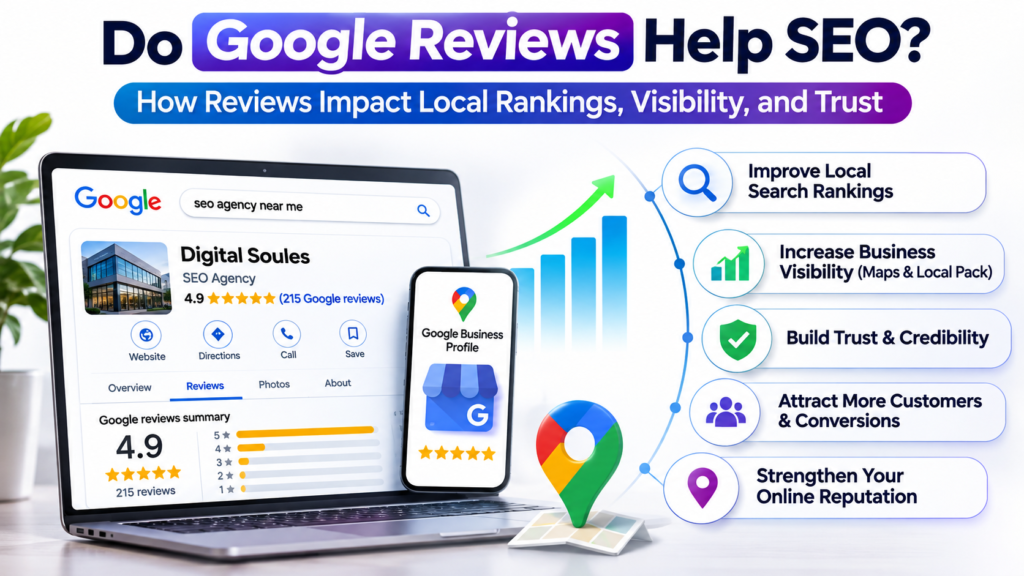
For local businesses, accurate business information, a well-maintained Google Business Profile, relevant local content, and genuine customer reviews can support local visibility.
How Long Does SEO Take for Different Types of Websites?
The following table provides broad planning estimates. Actual results can vary significantly.
| Website type | Possible timeframe for noticeable progress |
| New website | 6–12 months or longer |
| Established business website | 3–6 months |
| Local business website | 3–6 months |
| Small niche blog | 4–8 months |
| E-commerce website | 6–12 months or longer |
| Highly competitive website | 6–12 months or more |
These are not guaranteed industry benchmarks. The website’s starting condition, competition, budget, content quality, and implementation speed all matter.
How Can You Measure SEO Progress Before Traffic Increases?
One common mistake is judging SEO only by organic traffic. Traffic is important, but it is not the only sign of progress.
You should monitor several indicators throughout your SEO campaign.
1. Google Search Console
Google Search Console is one of the most useful free tools for tracking website performance in Google Search.
Monitor:
- Total clicks.
- Total impressions.
- Average click-through rate (CTR).
- Average position.
- Search queries.
- Pages receiving impressions.
- Indexing and crawling issues.
If impressions increase but clicks remain low, review your page titles, descriptions, rankings, and search intent.
2. Google Analytics 4
Google Analytics 4 helps you understand what visitors do after reaching your website.
Track:
- Organic search sessions.
- Engaged sessions.
- Landing page performance.
- Leads and enquiries.
- Purchases or other conversions.
- Engagement by traffic source.
The goal is not simply to attract more visitors. It is to attract visitors who are likely to become customers.
3. Keyword Ranking Tools
SEO platforms such as Ahrefs, Semrush, and other rank-tracking tools can help you monitor keyword positions over time.
Track your primary keywords and important supporting terms. Avoid checking rankings every few hours because search results can fluctuate.
4. Organic Leads and Conversions
For a business website, leads and sales are often more important than rankings alone.
For example, ranking for a keyword that brings 500 visitors who never contact your business may be less valuable than ranking for a specific service keyword that brings 20 relevant visitors and three enquiries.
Why Is Your Website Not Showing SEO Results?
If you have been working on SEO for several months without noticeable improvement, investigate the underlying reasons.
Some common causes include:
- Wrong keyword targeting: You may be targeting keywords that are too competitive or irrelevant to your audience.
- Weak content: Your pages may not answer users’ questions clearly or provide enough useful information.
- Indexing problems: Important pages may not be indexed or may be blocked from search engines.
- Poor internal linking: Search engines and visitors may struggle to discover related pages.
- Low-quality backlinks: Spammy link-building practices can create risks rather than meaningful improvements.
- Search intent mismatch: Your page format may not match what users expect to find.
- Inconsistent optimization: Your website may not receive regular improvements.
- Strong competition: Other websites may have more relevant content, stronger reputations, or better resources.
Before publishing more articles, review your existing pages and identify what is preventing them from performing.
Can SEO Results Come Faster?
Yes, some improvements can become visible relatively quickly, especially when a website already has a strong foundation.
Here are practical ways to improve your chances of making progress:
- Fix critical technical SEO issues.
- Make important pages easy to discover through internal links.
- Target relevant, realistic keywords.
- Improve pages that already receive impressions.
- Update outdated or incomplete information.
- Publish helpful content that satisfies search intent.
- Improve page titles and descriptions where appropriate.
- Earn relevant, editorially placed backlinks.
- Track results and make decisions using data.
Do not use shortcuts such as keyword stuffing, automated link schemes, or mass-produced low-quality content. They do not provide a reliable path to sustainable rankings.
Is SEO Better Than Paid Advertising for Faster Results?
SEO and paid advertising serve different purposes.
| SEO | Paid advertising |
| Builds organic search visibility | Can generate visibility as soon as campaigns become eligible to run |
| Requires ongoing optimization | Requires ongoing advertising spend |
| Can produce long-term traffic | Traffic generally stops when ads stop running |
| Rankings are not guaranteed | Ad placement depends on budget, competition, relevance, and auction factors |
| Helps build an organic content asset | Useful for testing offers and reaching audiences quickly |
Businesses often use both strategies. Paid advertising can support short-term campaigns while SEO builds long-term organic visibility.
Common SEO Timeline Mistakes to Avoid
Avoid these mistakes when evaluating your SEO campaign:
- Expecting first-page rankings within a few days.
- Changing page titles and content repeatedly without enough data.
- Publishing articles without keyword research.
- Focusing only on keyword positions.
- Buying large numbers of irrelevant backlinks.
- Ignoring technical SEO problems.
- Comparing a new website with an established competitor.
- Stopping SEO after only two or three months.
- Expecting every published page to rank.
Give changes enough time to be assessed, but do not use patience as an excuse to ignore poor performance. Review the data, identify problems, and improve your strategy.
Frequently Asked Questions
1. How long does SEO take to work for a new website?
A new website may need six to twelve months or longer to build meaningful organic visibility. It depends on competition, technical health, content quality, and how consistently the website is optimized.
2. Can SEO show results in 30 days?
Some SEO improvements can appear within 30 days. Google may crawl updated pages, indexing can improve, and certain keywords may gain impressions. However, significant and consistent organic traffic growth within one month is not a realistic expectation for most websites.
3. Why does SEO take so long?
SEO involves crawling, indexing, evaluating content, and ranking pages against competing results. Search engines also need to process changes and reassess information over time. This makes SEO a gradual process rather than an instant marketing activity.
4. How long does it take to rank on Google’s first page?
There is no fixed timeframe. Some less competitive keywords may reach the first page relatively quickly, while highly competitive keywords can take many months or longer. Google does not guarantee first-page rankings.
5. Does publishing more blog posts improve SEO faster?
Not automatically. Publishing useful, original articles that target relevant search intent can expand your website’s search visibility. However, publishing large amounts of thin or repetitive content does not guarantee better rankings.
6. How often should I check SEO results?
Review Google Search Console and Analytics regularly. A weekly review can help you spot technical or unusual changes, while monthly comparisons are often more useful for evaluating broader performance trends.
7. How long should I wait before changing my SEO strategy?
Allow enough time for Google to process important changes and for meaningful performance data to develop. Review early indicators after a few weeks, then evaluate broader trends over several months. If there is no progress, investigate technical issues, keyword targeting, content quality, and competition rather than blindly waiting.
8. Is SEO worth the investment if it takes months?
SEO can be valuable because well-performing pages may continue attracting relevant visitors without paying for every click. However, success depends on your market, business goals, execution, and ability to convert visitors into customers.
Final Thoughts
SEO is a long-term investment, not an overnight marketing solution. Many websites begin seeing measurable progress within three to six months, while stronger organic growth may take six to twelve months or more.
The best approach is to build a technically healthy website, publish useful content, target relevant keywords, improve internal linking, and earn trustworthy backlinks. Measure progress through impressions, clicks, rankings, organic traffic, and conversions instead of focusing on one metric.
At Digital Soules, we believe sustainable SEO growth comes from consistent improvements and strategies built around real users. Focus on providing value, monitor your results, and give your SEO strategy enough time to develop.