
What Are Business Listings in SEO?
Business listings are online profiles that display important information about a company, such as its name, address, phone number, website, business hours, and services.
These listings appear on search engines, online directories, review websites, maps, and industry-specific platforms.
For example, when someone searches for a restaurant, dentist, marketing agency, or repair service, they may find business information through Google Maps, Google Search, or an online directory.
Business listings help people discover companies, compare services, read reviews, and contact businesses.
In SEO, business listings are particularly useful for local search optimization because they help businesses establish an online presence and make their information accessible across relevant platforms.
If you want to understand the basics first, read our guide on what SEO is and how it works.
Why Are Business Listings Important for SEO?
Business listings can support local SEO by improving business visibility, making contact information easier to find, and helping potential customers discover nearby services.
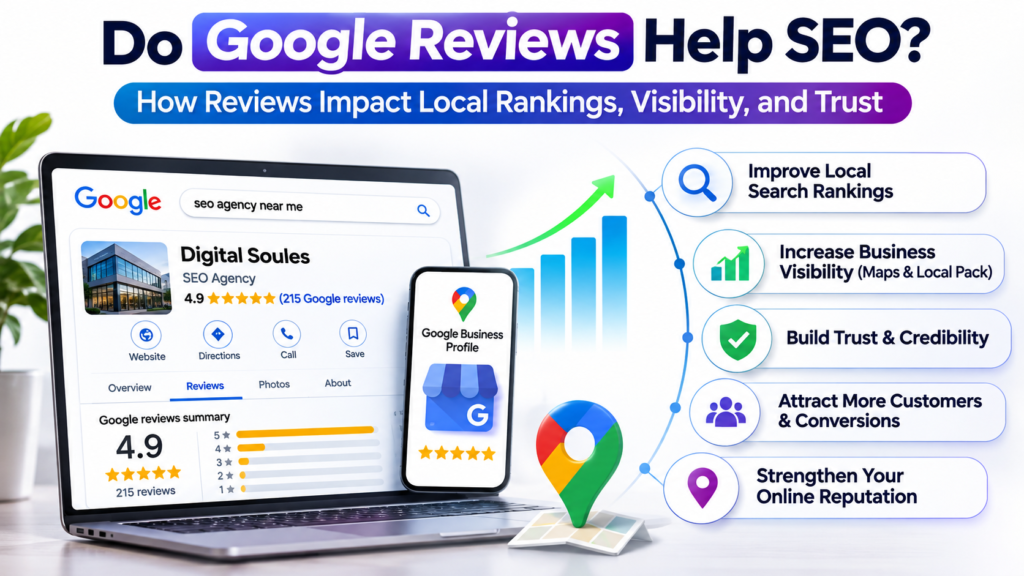
For example, imagine someone searches for “SEO agency near me.”
Search engines may show local businesses with relevant profiles, reviews, contact details, and location information.
A properly maintained business listing makes it easier for customers to understand what your business offers and how to contact you.
Here are some important benefits of business listings.
1. Improve Local Search Visibility
One of the biggest benefits of business listings is improved visibility in local searches.
When people search for products or services in a particular area, search engines may display relevant business profiles in local results.
For example:
- Best dentist in Lahore
- Restaurants near me
- Digital marketing agency in London
- Plumber in New York
A complete and accurate Google Business Profile can help an eligible business appear in relevant Google Search and Maps results.
Google explains that local results are mainly based on three factors: relevance, distance, and prominence. <a href=”https://support.google.com/business/answer/7091” target=”_blank”>Google’s local ranking guidance</a> provides more details.
2. Help Customers Find Your Business
Business listings provide useful information that helps potential customers contact or visit your company.
Depending on the platform, a listing may include:
- Business name
- Physical address
- Phone number
- Website URL
- Opening hours
- Services
- Customer reviews
- Photos and videos
- Directions
Imagine a customer looking for a nearby mechanic. They can compare available businesses, check their opening hours, read customer feedback, and choose where to go.
Accurate listings reduce confusion and make the customer journey easier.
3. Build Trust and Credibility
Customers often research a business before purchasing a product or booking a service.
They may check its website, online reviews, business information, and presence on trusted platforms.
When your company has complete and consistent information across relevant websites, customers can more easily recognize and verify your business.
Customer reviews also contribute to credibility.
For example, a local restaurant with genuine reviews, updated photos, and accurate opening hours may give potential customers more confidence than an incomplete listing.
However, never purchase fake reviews or create misleading business profiles. Focus on building a genuine reputation.
4. Support Google Maps Visibility
Google Business Profile is particularly important for eligible businesses that want to appear in Google Search and Maps.
A properly managed profile can display:
- Business location
- Contact information
- Opening hours
- Customer reviews
- Photos
- Services
- Website link
Google recommends verifying your business and keeping its information complete and up to date.
Its local ranking guidance also explains that relevance, distance, and prominence influence local results.
Business owners cannot simply pay Google to receive a better organic local ranking.
5. Create More Opportunities for Website Traffic
Many business directories allow companies to add their website URL to their profiles.
When someone discovers your business through a directory, they may visit your website to learn more about your services.
For example, a person searching for an SEO consultant may discover your company through an industry directory and then visit your website to explore your packages.
This can generate referral traffic and potential customers.
However, not every directory link provides an SEO ranking benefit. Focus on platforms that attract relevant visitors and provide genuine business value.
6. Strengthen Your Online Presence
Business listings help establish your company’s presence across different online platforms.
Your business may appear on:
- Search engines
- Local directories
- Review platforms
- Industry-specific websites
- Business associations
- Mapping services
Having a presence on relevant platforms makes it easier for customers to find information about your company.
It can also help establish a recognizable brand across the web.
7. Generate Customer Reviews
Many business listing platforms allow customers to share their experiences.
Reviews can help potential customers understand the quality of your products or services before making a decision.
They can also contribute to local prominence.
Google specifically states that more reviews and positive ratings can help a business’s local ranking.
Encourage genuine customers to leave honest feedback and respond professionally to both positive and negative reviews.
8. Improve Business Information Consistency
Consistent business information makes it easier for customers to recognize your company across different platforms.
For example, if your business name, address, and phone number are different across several directories, customers may become confused about which information is correct.
This is why businesses should regularly review their listings.
Pay attention to:
- Correct business name
- Accurate address
- Current phone number
- Working website link
- Updated opening hours
- Correct business category
Consistency is a useful local SEO best practice, although identical formatting across every directory should not be treated as a guaranteed direct Google ranking factor.
What Is NAP Consistency in Local SEO?
NAP stands for Name, Address, and Phone Number.
NAP consistency means keeping these three important business details accurate across your website and online listings.
For example, imagine your company has the following information:
| Business information | Correct details |
| Name | Digital Soules |
| Address | Your verified business address |
| Phone | Your current business number |
| Website | https://digitalsoules.com/ |
If you submit your business to multiple directories, use accurate information and update outdated details when they change.
Why Does NAP Consistency Matter?
NAP consistency helps:
- Customers identify your business.
- People find accurate contact information.
- Directories display reliable business details.
- Businesses manage their online presence more effectively.
Avoid creating multiple listings for the same location simply to increase your directory count.
Best Business Listing Sites for SEO
There are many platforms where businesses can create profiles and share their information.
The best options depend on your industry, location, and target audience.
Here are some well-known platforms.
| Platform | Best for |
| Google Business Profile | Local search and Google Maps visibility |
| Bing Places | Business visibility on Bing |
| Apple Business Connect | Business information across Apple services |
| Yelp | Local business discovery and customer reviews |
| Tripadvisor | Hotels, restaurants, and travel businesses |
| Foursquare | Location-based business discovery |
| Yellow Pages | General business listings |
| Chamber of Commerce directories | Local business credibility and networking |
| Industry-specific directories | Businesses targeting a particular profession |
Do not submit your website to every directory you find.
Choose platforms that are relevant to your location, industry, and customers.
For example, a hotel may benefit more from travel-related platforms, while a law firm should prioritize reputable legal directories.
How to Create an SEO-Friendly Business Listing
Creating a business listing is not difficult, but you should provide accurate and useful information.
Follow these steps to create a professional listing.
Step 1: Choose the Right Platform
Start with platforms that are widely used by your target customers.
For most eligible local businesses, Google Business Profile is a sensible starting point.
You can also consider Bing Places, Apple Business Connect, relevant local directories, and industry-specific websites.
Step 2: Enter Your Correct Business Name
Use your real business name.
Avoid adding unnecessary keywords, locations, or promotional phrases to your business name.
For example, if your actual business name is “ABC Dental Clinic,” do not change it to “Best Affordable Dentist in Lahore ABC Dental Clinic” just to target additional keywords.
Use the name customers recognize.
Step 3: Select the Correct Business Category
Business categories help platforms understand what your company does.
For example:
- Digital marketing agency
- Restaurant
- Dental clinic
- Plumbing service
- Law firm
- Real estate agency
Choose the most accurate primary category and add relevant secondary categories when the platform allows them.
Step 4: Add Accurate Contact Information
Provide your correct address, phone number, and website.
If you serve customers at a physical location, make sure the address is accurate.
If you operate as a service-area business, follow the platform’s eligibility and address-display guidelines.
Step 5: Write a Clear Business Description
Explain what your business offers, who you serve, and what makes your services useful.
For example:
“Digital Soules provides SEO and digital marketing resources to help businesses improve their online visibility, attract relevant audiences, and grow their digital presence.”
Keep your description informative rather than filling it with repeated keywords.
Step 6: Upload Relevant Photos
Add genuine photos that represent your business.
Depending on your industry, these may include:
- Storefront photos
- Office images
- Product photographs
- Team or workplace images
- Service-related photos
- Business interiors
Use clear, high-quality images that accurately represent your company.
Step 7: Verify and Maintain Your Listing
Complete the verification process required by the platform.
After verification, regularly review your business information.
Update your opening hours, phone number, website, services, and other details whenever they change.
Common Business Listing Mistakes to Avoid
Creating a listing is only the first step. You should also avoid mistakes that can create confusion or reduce the quality of your business presence.
1. Creating Duplicate Listings
Multiple profiles for the same business location can confuse customers and create management problems.
Review existing profiles before creating another listing.
2. Using Incorrect Business Information
Outdated phone numbers, incorrect addresses, and broken website links can make it difficult for customers to contact you.
Check your information regularly.
3. Choosing the Wrong Category
An unrelated business category can make your listing less relevant to the searches you want to appear for.
Choose categories that accurately describe your business.
4. Adding Keywords to Your Business Name
Do not insert extra keywords into your business name unless they are genuinely part of its real-world name.
Follow each platform’s business representation guidelines.
5. Ignoring Customer Reviews
Leaving customer feedback unanswered can create a poor impression.
Respond politely and professionally, especially when customers raise genuine concerns.
6. Submitting Your Website to Low-Quality Directories
A large number of directory submissions does not guarantee better rankings.
Avoid spammy platforms that exist mainly to distribute links.
Prioritize relevant directories that people actually use.
Are Business Listings a Direct Google Ranking Factor?
Business listings can support local SEO, but it is important to understand how they relate to Google’s ranking systems.
Google explains that local results are mainly based on:
1. Relevance: How well your business profile matches what someone is searching for.
2. Distance: How far your business is from the person searching or the location included in the search.
3. Prominence: How well-known your business is. Google notes that information such as links from websites and customer reviews contributes to prominence.
This means that maintaining a complete Google Business Profile and earning genuine customer reviews can support local visibility.
However, submitting your website to hundreds of random directories is not a guaranteed ranking strategy.
Also, a business listing does not guarantee that your website will rank higher in ordinary organic search results.
Focus on accurate business information, relevant platforms, genuine reviews, and a useful website.
Business Listings vs. Backlinks: What Is the Difference?
Business listings and backlinks are related to off-page SEO, but they serve different purposes.
| Business listings | Backlinks |
| Display business information | Link from one website to another |
| Help customers discover companies | Help search engines understand relationships between pages |
| Commonly include name, address, and phone | Usually include a clickable link |
| Support local business visibility | Can contribute to organic ranking signals |
| May contain a website link | May come from blogs, publications, and other websites |
Some business listings include backlinks, but not every listing provides a followed link or a direct ranking benefit.
If you want to understand how external links contribute to SEO, explore our guide on what a reciprocal link in SEO means.
Frequently Asked Questions
Are business listings important for SEO?
Yes. Business listings can support local SEO by making business information available across search engines, maps, directories, and review platforms. They also help customers discover and contact local businesses.
Do business listings improve Google rankings?
Accurate and complete Google Business Profile information can help businesses match relevant local searches. Google identifies relevance, distance, and prominence as the main factors in local results. However, random directory submissions do not guarantee higher rankings.
How many business listings should I create?
There is no fixed number. Start with important platforms such as Google Business Profile, Bing Places, Apple Business Connect, and reputable directories relevant to your industry and location.
What is NAP consistency in SEO?
NAP consistency means keeping your business name, address, and phone number accurate across your website and online listings.
Are free business listings good for SEO?
Yes, free listings on reputable and relevant platforms can help customers discover your business. Their value depends on the platform, audience, and accuracy of the information.
Do business directory backlinks help SEO?
Some directory links may provide useful referral traffic and contribute to your backlink profile. However, not all directory links pass ranking value, and submitting to spammy directories can be harmful.
Is Google Business Profile necessary for local SEO?
It is one of the most useful tools for eligible businesses that want to manage their presence on Google Search and Maps. Businesses should verify their profiles and keep information updated.
Can I list my business in multiple directories?
Yes. You can list your business on multiple relevant directories, provided the listings follow each platform’s guidelines and contain accurate information.
Final Thoughts
Business listings are an important part of a local SEO strategy because they help customers discover your company, find accurate contact details, read reviews, and understand the services you provide.
For local businesses, a complete and verified Google Business Profile should be a priority. You can also build a presence on relevant directories, industry platforms, and mapping services.
However, successful local SEO is not about creating hundreds of listings. It is about maintaining accurate information, earning genuine customer reviews, and building a trustworthy online presence.
Combine business listings with quality website content, relevant backlinks, and a strong local SEO strategy to improve your chances of reaching potential customers.
For more SEO guides, digital marketing tips, and practical online growth strategies, explore Digital Soules.